

Many angles.One target.One plan. — Dr. Hojjatollah Saboori
Radiation Oncologist Tabriz
Cancer care is often a mix of several treatments. Here you can read what each one is and how each stage goes.
No patient is known by one word.
Dr. Hojjatollah Saboori is a radiation oncologist in Tabriz. The field covers radiotherapy and the planning of cancer medicines: radiotherapy, chemotherapy, hormone therapy, immunotherapy and targeted therapy. When you hear the word "cancer" or "radiation", most of the questions arrive at once, and the answers are not obvious. This site is for those days, for the patient and for the person beside them: what each treatment is, what its stages are, and when not to wait for an appointment.
More about the doctorFive treatments, in plain language.
These pages explain what each treatment is, how it is given and what side effects it may have. Which ones suit you, and in what order, is decided after your records are reviewed.
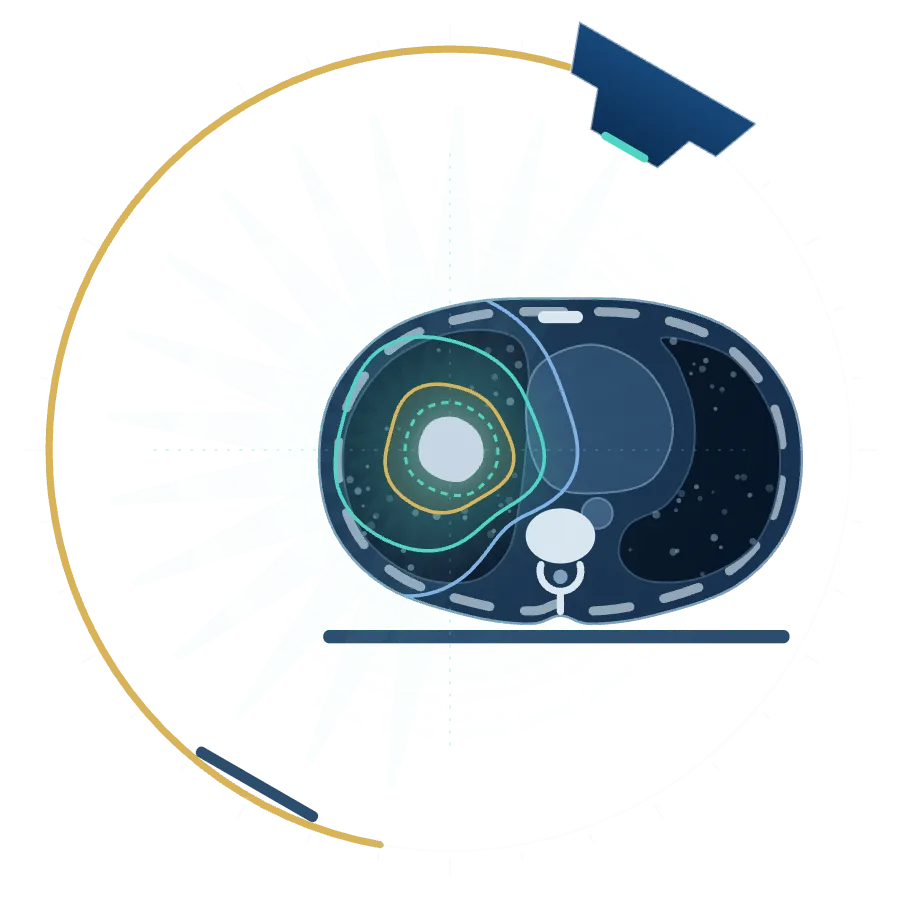
Radiotherapy
A machine outside the body aims radiation from several directions at a set area and damages the DNA of cancer cells. You cannot see or feel the radiation, and most patients are treated as outpatients.
Read moreChemotherapy
Medicines that harm fast-dividing cells. Why treatment comes in cycles, and where its side effects come from.
Read moreHormone therapy
For cancers that grow on hormones, such as some breast and prostate cancers.
Read moreImmunotherapy
It strengthens the immune system against cancer. Its side effects differ from chemotherapy and should be reported early.
Read moreTargeted therapy
It acts on specific proteins in the cancer cell, so the tumour often has to be tested first.
Read more
From your records to the last follow-up
Cancer treatment is not a single step. Each stage has a clear job, and you know what is coming before it starts.
- Step 1 of 5.
Visit and record review
Your pathology report, scans and earlier treatment are read together with an examination. This visit usually takes longer, so write down your questions and bring someone with you.
- Step 2 of 5.
Choosing the treatment plan
The aim of treatment, the methods and their order become clear: radiotherapy alone or with medicines, before surgery or after it. Ask what the aim of your treatment is.
- Step 3 of 5.
Planning CT
If you need radiotherapy, a CT is taken in the position you will be treated in. These images are used to work out the treatment area and the beam paths, and sometimes a mould or mask is made.
- Step 4 of 5.
Treatment sessions
Most patients are treated as outpatients. The radiation itself lasts a few minutes, and most of the session goes on getting you into the right position. Side effects are checked along the way.
- Step 5 of 5.
Follow-up after treatment
The effect of radiation does not stop with the last session, and some side effects appear later. Get your follow-up schedule and a treatment summary, and keep them.
With you at every stage of diagnosis, treatment and follow-up.
The patient support form has six sections: laboratory, imaging, pharmacy, referral to doctors, rehabilitation and wellbeing, and services at home.
Medical diagnostic laboratory
Quick appointments and quick results. You write the name of the pathology centre on the form.
Medical imaging and ultrasound
CT scan, MRI, ultrasound, PET scan, bone scan and mammography.
Pharmacy and specialty medicines
For specialty medicines, you write the name of the pharmacy on the form.
Referral to specialists and sub-specialists
You write the name of the doctor or the specialty you want on the form.
Rehabilitation and wellbeing
Quick appointments and referral to rehabilitation and wellbeing specialists, arranged by the support team.
Treatment and rehabilitation at home
Doctor visits, clinical nursing, physiotherapy and rehabilitation at home.
Wherever the form says "free", that service is free.
What is your question right now?
Tap your question to reach the answer. This list does not replace talking to your doctor.
- Am I a risk to my family?
- Why so many sessions?
- What do I bring on day one?
- What is a planning CT?
- What is a session like?
- Side effects of my area
- Caring for skin and mouth
- Radiotherapy to ease pain
- Treatment is over. Now what?
- How these treatments differ
A fever of 38°C or higher during treatment, severe breathlessness, chest pain, bleeding that will not stop or sudden confusion cannot wait for an appointment. Call your care team or 115 (Iran's emergency number). When should I act urgently?
Simple answers to the first questions.
Does radiotherapy hurt?
You cannot see, feel, hear or smell the radiation. You only hear the machine moving. Discomfort such as tender skin or tiredness, if it comes, builds up gradually during treatment.
After a session, am I a risk to children or a pregnant woman?
Not with external radiotherapy. The beam comes from outside and nothing stays in your body, so you can be near anyone. With some internal treatments, such as brachytherapy or radioactive medicines, the rules differ and your care team will tell you what to do.
How many sessions will I need?
It depends on the type of cancer, the aim of treatment and the dose. Most patients are treated once a day on working days, and a course can run from one session to several weeks. Your number is set once treatment is planned.
How long is each session?
The radiation itself lasts about 1 to 5 minutes. A whole session usually takes 30 to 60 minutes, because most of it goes on getting you into the right position.
Will I lose my hair?
Radiotherapy causes hair loss only in the area treated. With chemotherapy it depends on the medicine. Before you start, ask your doctor what to expect from your treatment.
If I have few side effects, is the treatment not working?
No. Side effects do not show how well treatment is working. Your doctor checks that with examinations, tests and scans.
When do radiotherapy side effects get better?
Affected healthy cells usually recover within a few months of finishing treatment. Some effects stay, and some appear months or years later. That is why follow-up matters.
When should I call urgently?
Take a fever of 38°C or higher during treatment seriously, and speak to your care team before taking a fever reducer. Severe breathlessness, chest pain, heavy bleeding or sudden confusion cannot wait for an appointment. The full list is in the patient guide.
Where do you give radiotherapy?
The treatment centre will be announced once the doctor confirms it.
Do you also offer brachytherapy?
Details will be announced once the doctor confirms them.
Do you work with insurance?
The list of insurers will be announced soon.
These answers are general and do not replace your doctor's advice for your situation.
The first step, a review of your records.
Go to the booking page or talk to support. Have your pathology report and scans ready.
Support number